Category: Vignettes

  • Choosing Life When You Want To Die

    Choosing Life When You Want To Die

    Trigger warning: this article contains frank discussion of mental illness, including the self-destructive thoughts and behaviours associated with depression, body image, trauma, and suicide. I wrote this article in November 2022 for the Amsterdam-based Slim Radio.


    It is no secret that mental health is a fickle thing, especially in our fast-moving, media-based society. It seems the more we look, the more we can find examples of stress, dissociation, self-hatred, and loneliness taking hold of the people we hold most dear to our hearts. It is easy to get down on ourselves, it is easy to feel like life is pointless, that it has no sense of direction… but when this feeling stays consistent, when it gets worse and worse, that is when we truly feel the effects of how much our mind can torture us.

    Maybe you take the initiative and you reach out to someone, but you hear the same tired responses over and over again:

    “It gets better, hang in there!”

    “Oh haha, that’s such a mood/that’s so me.”

    “Oh, I’m so sorry.”

    “Get some sleep/workout/eat healthy, you’ll feel better” (although, that one is scientifically true to an extent).

    Tired responses, and yet it is all we can say to each other when we are trying our best to make it through the day. I don’t blame you… or me… for saying any of this.

    …Or maybe, nobody seems to care. Maybe they are angry at you for feeling like this, because how could you deign to hurt them in this way? But how could the people we love, our own family and friends, be mad we are hurting? Maybe it is self-reflection our parents cannot bear to take, as they realise the generational trauma that hurt them is hurting their child, too. “Grow up, if I dealt with it, so can you.” Maybe the people we love are the ones who can hurt us most.

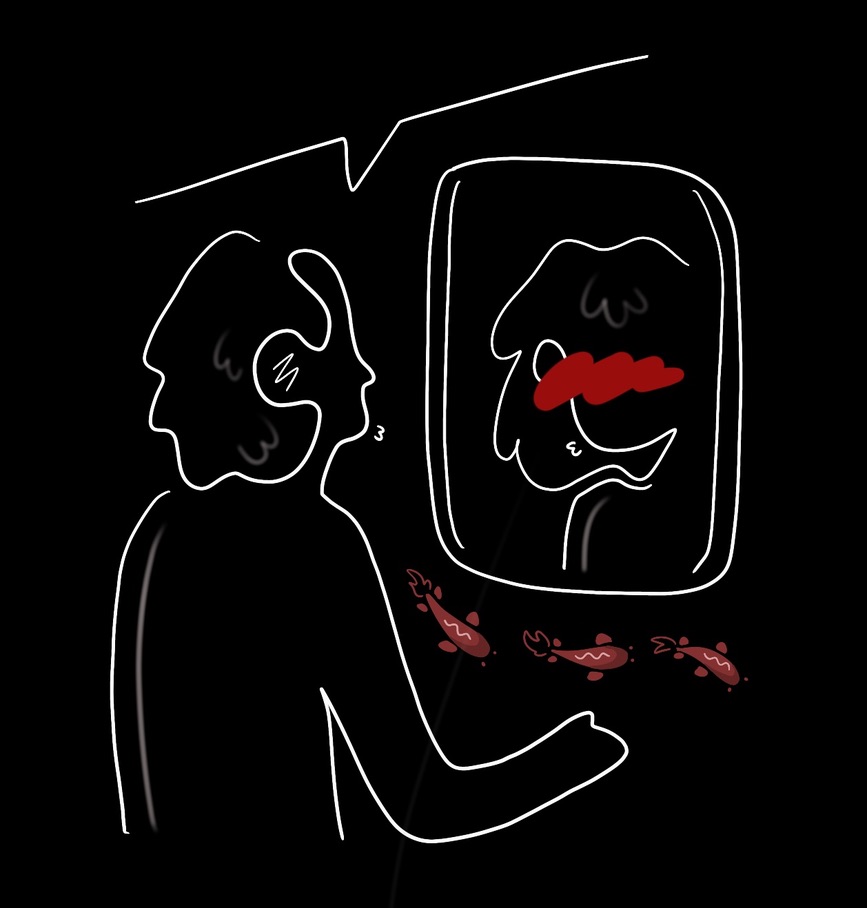
    If I could talk to my thoughts, I would tell them: Fuck you. I blame you for taking away my childhood. I blame you for forcing me to grow up too fast and become “so mature”. I blame you for zapping my focus, dulling my passions, making every day a roulette wheel of emotions, forcing me to feel ashamed of my reflection. I blame you for giving me intrusive thoughts that make me terrified at what my brain can come up with, and I blame you for making me feel scared of talking to anyone lest they think I am annoying, ugly, or making it all up for attention. I blame you for halting my growth in a time when I needed it most. I blame you for making me feel like life is pointless.
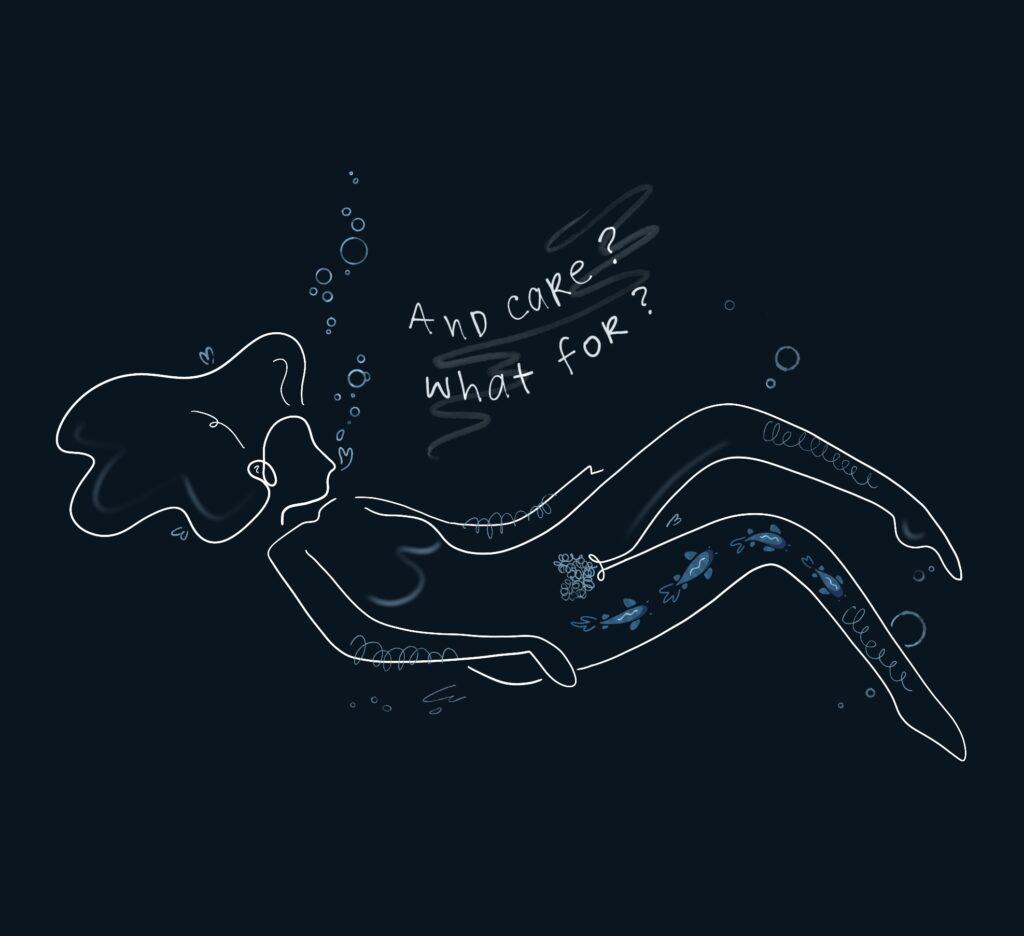
    But also, I am sorry you had to manifest at all. I am sorry you had to exist in a body and brain so young. I am sorry you were ever my only source of comfort. I am sorry I could not deal with you in the way you needed. I am sorry we have to live in this limbo with each other.

    Most of all, I am so sorry if you have ever struggled with these thoughts, reader. So many people do every day, in every country and every environment you can think of. You are not alone, and you are not invalid if you are in a more fortunate position than others may be in. You are also not invalid just because many people struggle with your thoughts. Your experience does not have to be “rational” or “correct” in order for you to feel like this.

    Picking up the pieces of our lives when they have been so needlessly shattered is an onerous task. The uphill battle mentally ill people fight every day in trying to get motivation to help themselves is an endeavour in itself (not to mention the lack of adequate mental health services worldwide). As time passes, I find my ability to deal with those thoughts waxes and wanes, but ultimately, I can find comfort in the good in my life. Maybe one day I will look in the mirror and realise I have not wanted to die in years, and the peaceful silence of night does not feel like an invitation to start overthinking.

    [2025 update: Happily, I can confirm the previous sentence has come true, though it felt impossible when I wrote it.]

    Honestly, I am not preparing for that to happen anytime soon… but having a routine for how to cope has helped so much. Simplifying your life and prioritising your happiness, taking a break from social media, learning new things, can all have a profound and unexpected effect when life feels terrible. I think everyone should have something to look forward to, no matter how small. Finding what works for you is the most important thing, but learning to be content with yourself is a slow process. I suggest we all start as soon as we can. Bundle up for winter and don’t forget to take your vitamin D… no sun is an absolute bitch. For now: I see you, and I love you.


    It is my strong conviction that we need to be more honest about mental illness. However, if you feel like your thoughts overwhelm you to the point of breakdown, please remember there are ways to get help (as well as free/low cost options). Try to ask around, talk to your GP, professors, community figures, or look up ways to get professional help. I promise you, happiness—and life—is worth it.

    Illustrations by me.
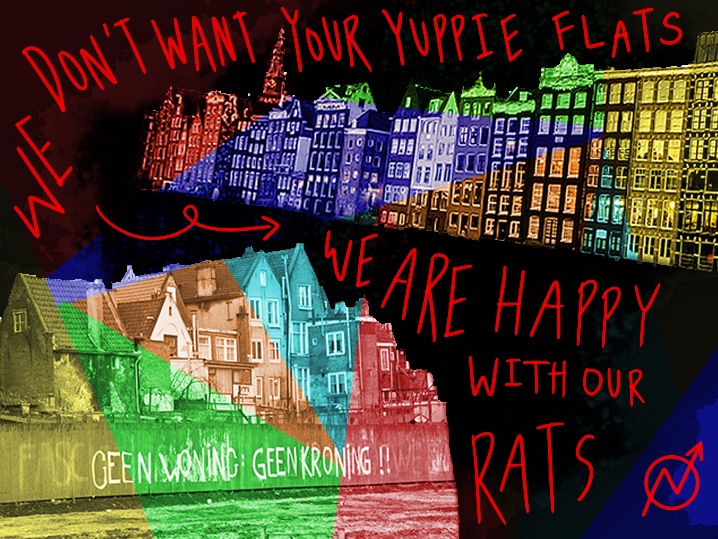
  • WE DON’T WANT YOUR YUPPY FLATS WE ARE HAPPY WITH OUR RATS

    WE DON’T WANT YOUR YUPPY FLATS WE ARE HAPPY WITH OUR RATS

    I wrote this article in September 2022 for the Amsterdam-based Slim Radio.


    It was an uncommonly sunny Wednesday for Amsterdam when I hopped on the tram towards my destination in De Pijp. I had no idea where I was going, only the address and the feeling that I would know it when I saw it. As I stepped off the tram and let Google Maps lead me through the groups of tourists onto the bustling Ferdinand Bolstraat, I found what I was looking for: a boarded-up, graffitied-over facade of a traditional Amsterdam “rijtjeshuis”, or terraced house.

    The entire board-covered window had been propped open so one could step in from the pavement, and in the middle of this yuppie neighbourhood was an unlikely scene: a dusty, concrete floor, covered in various pieces of mismatched furniture, clothing racks, personal belongings… and young people, who were suddenly all peering at me. I scrambled over the raised windowsill, mumbled a quick, “hi, sorry I’m late,” and found a spot on the floor.

    It was not long before I became acquainted with everyone there. We sat in a circle holding cheap beers and cigarettes, listening to a squatter with wispy brown hair and a crocheted lighter holder around her neck tell us tips, legal advice, and some stories. As dusk fell, we went on an expedition for abandoned furniture, finding a lovely scarlet sofa that we hauled several blocks (to the bemusement of many onlookers).

    In the weeks following, I attended several other similar meetings at different squats, with different vibes and workshops, but this first foray into the anti-anti-kraak scene in Amsterdam is burned into my memory. For a long time, I speculated as to why exactly, but I realised while writing this that the image of anarchist squatters completely subverted my expectations of what I imagined De Pijp (and more broadly, Amsterdam proper) to be.

    But why? Why was this image of Amsterdam even in my mind at all? After all, has Amsterdam not always been the “Mokum”, the “safe haven”, the place where freaks and weirdos were, if not accepted, at least tolerated?

    The reality is far less idyllic. Squatters in Mokum have long waged a battle against an increasingly resistant government. The Amsterdam of the ‘60s to ‘80s, when its reputation for free, leftist ideologies was first forged, is long gone. The 2008 global financial crisis, and most recently the coronavirus and war in Ukraine spurred financial policies with big consequences. Turning to squatting may not be glamorous, but for desperate working-class people and students, it becomes the only option as rent prices remain astronomically high.Social spending cuts in the ‘90s brought about the doubling of homelessness since 2009, social housing waiting lists that are decades long, and a rise in rent/energy prices that does not correlate with a rise in wages. This is a turbulent time, and people in Amsterdam are struggling.

    When I was faced with moving out, my friend Leo* was the one who introduced me to the world of squatting and anarchist action, who connected me to Amsterdammers in the community. “The Dutch prime minister and the mayor of Amsterdam are very anti-squatter, they’ve been cracking down on all the squatters pretty hard,” he noted upon our discussion of the topic. His sentiment on the Dutch government is shared across the country, with anti-government views being particularly tied to the ideology of many squatters. The Dutch government has cracked down on kraakers, going from more tolerant laws in the ‘70s to outright criminalisation of squatting in 2010. Nowadays it is more common to see expats and rich students milling about where once there was a thriving alternative movement.

    Is it anyone’s individual fault? Of course not, everyone needs a place to call home, and living near the areas you frequent will always be preferable over a long commute. Nevertheless, it is impossible to deny the effect that conservative fiscal policies, NIMBY-ism, and the overarching Dutch tradition of conformity has had on the former hippie culture in Amsterdam.

    Reader, I know it is difficult, but we must also examine ourselves in this discussion. I stepped through that window into the squat as someone on the precipice of homelessness; I write this article now as someone who lives in the heart of the city. As an international student who came to Amsterdam last year, who has their parents’ support and does not speak Dutch (yet!), I often wonder how I contribute to the problem. One day, I will graduate, land a job that hopefully supports me enough to live comfortably and continue my habitation in Amsterdam. Whether knowingly or out of ignorance, I and many others could become gentrifiers.

    To combat this, we should make it a personal conviction to connect with our neighbourhoods. Leo recommends to “attend protests for squatting and movements that champion alleviating the housing crisis … especially in the North [of Amsterdam].” Find local-led endeavours, community centres, squat hours, etc. and give something back to the people who belong alongside us in this beautiful mokum. Uphold the spirit of Amsterdam that probably drew you to this city in the first place. Shop at local businesses, and diversify your tastes by experiencing all the cultural food and activities the immigrants in Amsterdam have to offer. This is not difficult and should be the minimum if we want to keep Amsterdam weird. The tourists, after all, will only keep coming.

    (*name changed for anonymity)

    Illustration by me.

  • Me, Myself, and the Weird UK

    Me, Myself, and the Weird UK

    I wrote this article in March 2023 for the Amsterdam-based Slim Radio. Ironically, I have since begun a Master’s at the University of Oxford. I suppose we all do things we do not expect; yet, this article will always have a special place in my heart for the memories it holds.


    Imagine, if you will, getting invited to a party at one of the top universities in the world that you don’t go to, in a city you don’t live in, in a country you are only visiting. Sounds like it would be a fun adventure, right? At least mildly interesting? I would agree… until you get dressed and finally get to the party held in an Oxford college’s common room, and the most bizarre experience unfolds before your eyes. About 30 people who look like they should be in high school are standing in an empty room, dressed in costumes, seemingly random and without a common theme.

    Pop music is playing, songs you remember from middle school dances chaperoned by parents. A song you don’t know comes on, and everyone links arms in a big circle (you join, because what else is there to do) and all at once, they run into the middle to form the weakest mosh pit of all time. They step back and do it all over again at the next chorus. There is no explanation. There is no escape. You can only double over in laughter at the sight, which must be confusing everyone else around you. Who the hell is this random person? Why are they laughing? She doesn’t even go here!

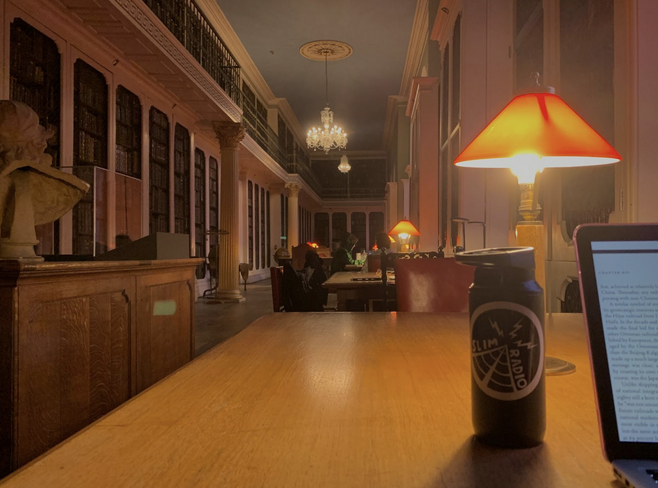
    Worcester College reading room

    Though I seriously considered some schools in London, I ended up coming to Amsterdam. Before I moved, Western Europe felt like the perfect escape from the United States, which somehow exponentially surpassed my yearly expectations on how much of a capitalist dystopia it could become. Moving to a country in the big ol’ EU became a dream driven by my parents’ stories of living in Germany, and memories of the several trips my family had gone on: Rotterdam, Paris, Barcelona, and London.

    While I eventually settled on the lovely rainy Netherlands, for a couple years, the United Kingdom sounded like the PERFECT fit… I mean, world-renowned education in a country that has good healthcare, history, cool cities, AND predominantly speaks English? Sign me up, right?

    Well… maybe not.

    In these past couple years of living in continental Europe, I’ve come to realise that a) every country obviously has its fair share of disadvantages, and b) the UK is not as perfect as I imagined. And I’m saying this as someone who grew up enjoying British television, was absolutely obsessed with Harry Potter, and dreamed of one day visiting iconic places in London, which so many clothing brands loved co-opting for their own cliché designs.

    It seems to be getting worse and worse, as Brexit came suspiciously right before major shortages and a predicted recession, and the energy crisis post-Russian invasion sent energy prices skyrocketing. Suddenly, the average person in the UK is faced with the reality that they may not be able to afford or even find some of the most basic necessities they have come to expect.

    I am very glad I did not end up studying in the UK. I am not sure what to make of the situation there, but it feels increasingly similar to how I felt while living in the US, and no matter how much I like visiting I cannot reconcile the fact that something is very wrong. Yet, I keep going back: I have friends to visit who live in Manchester, London, Oxford and… somewhere in Wales (sorry Jake, I’m not doxxing you today). My partner grew up in the north of England and goes back and forth between NL and the UK, so I love going whenever I get the chance.

    I have no idea how I suddenly got caught up in this country and its comings and goings, but I find myself listening to videos and podcasts about the happenings in Ol’ Britannia: its grand and fucked-up history, what’s wrong with it, where we go from here. Being briefly thrust into the student life of the University of Oxford is also one of the strangest experiences I’ve had so far, though simultaneously awesome. I don’t think I’d change it for anything, especially the weird experiences I have no business attending… sorry Oxford’s young conservative whose hat I, um, drunkenly stole at Port and Policy (in a roundabout way I am like Robin Hood, taking from the wealthy and giving to the middle-class).

    The hat in question.

    I am not sure what to make of the UK and its place in my life. On the one hand, maybe I want to live there one day. On the other hand, that is not going to happen unless things improve. But everywhere is fucked up right now, and that’s not changing anytime soon. I guess the best I can do is carve my own safe space in the world, and if that means ending up in places I should never have ended up in, I will continue to do so proudly. Being young means doing weird things, and at least some of my Weird can be found in the UK.


    https://www.vox.com/2016/6/25/12029962/why-did-britain-leave-the-eu

    https://foreignpolicy.com/2023/02/01/brexit-britain-recession-economy/

    Photos by me.